N.P. Buila-Vânturarița

Buila-Vânturariţa National Park, a site of the European Natura 2000 Ecological Network (SCI and SPA), was established by GD 2151/2004, as a result of the studies and endeavors of the Kogayon Association and is administered by the RNP Romsilva in partnership with the Kogayon Association.

It is located in Vâlcea county, in the south of the Căpăţănii Mountains, on the territory of the Costeşti, Bărbăteşti and Băile Olăneşti localities.
It is the smallest national park in Romania, with an area of almost 4500 ha.

The park includes the linear calcareous ridge of the Buila-Vânturariţa massif, with a length of about 14 km, dominated by the two peaks that give the name of the massif: the Buila peak (1849 m) and the Vânturariţa Mare peak (1885 m).

The calcareous massif has numerous exokarst forms (gorges, sinkholes, lapis) and endokarst (caves and avenues), paleontological sites, but also virgin forests and numerous protected species of flora and fauna.

An additional element of attraction of the park is the cultural-historical objectives: monasteries, hermitages, churches, including caves, as well as traditions, customs and traditional architecture in the villages at the foot of the mountain.

P.N. Buila-Vânturarița

Location

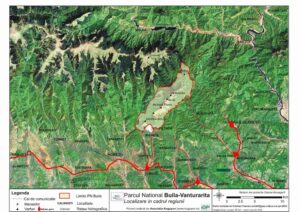
Location The Buila-Vânturariţa massif is located in the central-northern part of Vâlcea county and is part of the Căpățănii Mountains. The massif stands out from their main chain, both by layout and by constitution and relief. The main ridge of the Căpățănii Mountains, consisting mainly of crystalline schists, has an
Read More
P.N. Buila-Vânturarița

Access points

Access points Buila-Vânturariţa National Park has 6 entry points: 3 in the Costeşti commune, one in the Bistriţa valley and two in the Costesti Valley: Bistriţa, Pietreni-Prislop and Pietreni-Valea Morii; 1 in Bărbăteşti commune on the Otăsăului valley; 1 in the village of Cheia on the Cheia valley; 1 in

Read More
P.N. Buila-Vânturarița

Map

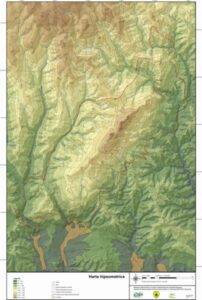
the map The Buila-Vânturariţa massif is located in the central-northern part of Vâlcea county and is part of the Căpățănii Mountains. The massif stands out from their main chain, both by layout and by constitution and relief. The main ridge of the Căpățănii Mountains, consisting mainly of crystalline schists, has

Read More
P.N. Buila-Vânturarița

Geology

Geology Tectonic framework From a tectonic point of view, the area is part of the Carpathian Orogen. The Buila-Vânturariţa massif is part of the Getic canvas, a unit of the median Dacids in the Southern Carpathians, put in place in the Senonian, within the Laramic tectogenesis. The Getic cloth is

Read More
P.N. Buila-Vânturarița

Geomorfology

Geomorphology Unlike the Capățănii Mountains of which it is a part, the Buila-Vânturariţa Massif has special characteristics, specific to linear and island calcareous ridges. The main peak has a length of about 14 km, but having a unitary character only between the Costeşti gorges and the Cheile Cheia, with a

Read More
P.N. Buila-Vânturarița

Climate

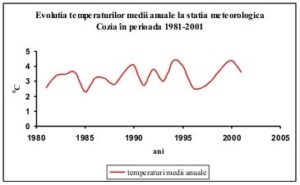
Climate The climate is vertically layered, following the relief steps, with differences and even climate inversions from one slope to another. The beech floor is characterized by precipitation between 600 and 900 mm/year, even reaching 1000 mm/year, a humidity between 68 and 70%, average annual temperatures between 6 and 90C.

Read More