Climate
The climate is vertically layered, following the relief steps, with differences and even climate inversions from one slope to another.
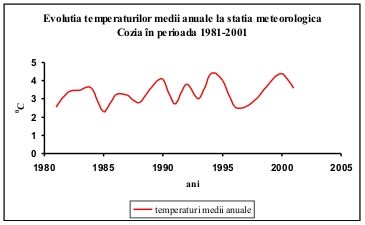
The beech floor is characterized by precipitation between 600 and 900 mm/year, even reaching 1000 mm/year, a humidity between 68 and 70%, average annual temperatures between 6 and 90C.
The spruce floor is characterized by precipitation between 700 and 900 mm/year, a humidity between 67 and 70% (decreases with increasing altitude), average annual temperatures between 2 and 50C and by the predominance of winds with NW-SE direction.
The subalpine floor is characterized by precipitation higher than 900 mm/year, average annual temperatures between 1 and 20C, a long period in which the snow remains unmelted and a short period of plant vegetation.
The influence of the milder climate in Oltenia has a significant impact on the Căpățănii Mountains, especially on the southern slopes. There is a fairly obvious difference between the climate of the slopes with southeastern exposure and those with northwestern exposure. In the case of the former, we are dealing with a milder climate, with sub-Mediterranean characteristics due to the strong insolation and heat storage by the limestone, at altitudes higher than 1000 m, there are frequently higher temperatures than in the the areas much lower altitudinally, and the vegetation developing much faster on these slopes. On the other hand, on the slopes with north-west exposure and in the deep valleys, the temperatures are much lower, the snow persists until late in the summer, and the colder climate species climb up to the level of the ridge, with frequent inversions of the vegetation layers.
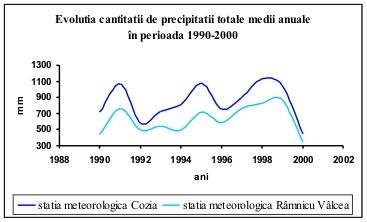
The average annual precipitation reaches 1200 mm at an altitude of about 1400 m. In the mountain area, the number of rainy days is 150 – 160 per year. In the areas above 1500 m, the first snow falls at the end of October and melts in May. Sometimes patches of snow linger in the valleys until midsummer.
–>