Hydrology
The entire hydrographic network of the Buila-Vânturariţa massif is tributary to the Olt River, through its direct or indirect right-wing tributaries, with a course direction, in large lines from north to south. The main rivers flowing in the massif are, from southwest to northeast:
- Bistriţa, a tributary of the Olt, which springs from the Căpățănii Mountains and is formed by the union of two main streams: Gurgui (west), with the springs in Curmătura Rodeanu and Cuca (east), with the springs in Curmătura Zănoaga.
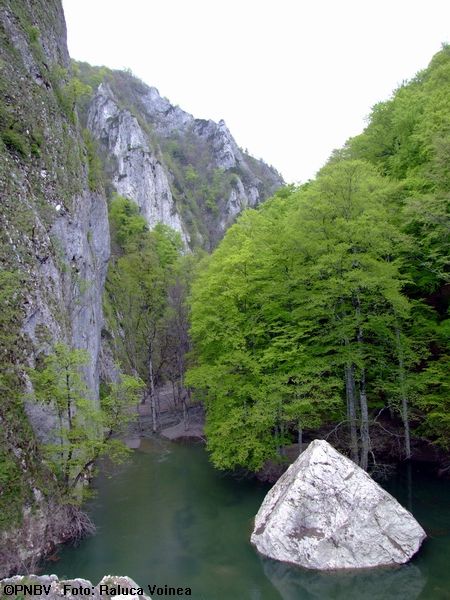
It crosses the calcareous bar of the massif by digging gorges in its southwestern extremity, gathering the waters of the Bulzu Mountains and La Clae (eastern slopes), through numerous streams (Fântânii stream, Bulzului stream) and the mountain Arnota (western slope);
- Costeşti, a left tributary of Bistriţa, where it flows south of the Costeşti commune, with springs also in the Căpățânii mountains (Curmătura Lespezi), which gather the waters from the northwestern slopes of the massif (the sector up to Plaiul Lespezi) (Sasa Voiceşti, Ghelălău, Curmăturii streams), the eastern slope of the Arnota mountain and the southern slope of the Cacova mountain (Pârâul Sec or Valea Morii).
The river found its place along the path of an important fault and crossed the massif from north to south Săpâng Spectacular gorges.
- Otăsău, a left tributary of Bistriţa, which has its origin in Curmătura Builei and collects the waters from the southern slopes of the Piatra and Albu mountains (Valea Bulzului, Valea Pătrunsa).
- Cheia, a right tributary of Olăneşti, has its sources in the Căpățănii Mountains (Zmeuret – Preota area). It collects water both from the high area of Căpățănii and Buila-Vânturariţa, both on the northwestern and southeastern slopes. The key digs in the limestones between Stogu and Vânturariţa a very spectacular gorge sector, one of the wildest in the country.
- Olăneşti, a right tributary of the Olt, with springs in the Căpățănii Mountains (Gera Peak), which also gathers the waters from the eastern slope of Mount Stogu. Olăneştiul also digs a sector of gorges, shorter but very spectacular, the limestone bar extending to their eastern slope.
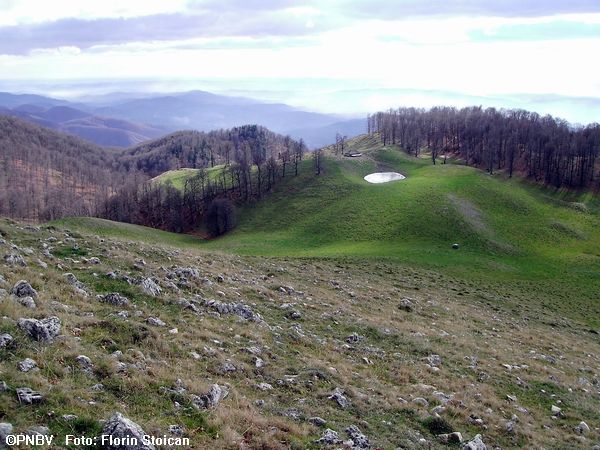
In terms of lakes and water accumulations, the massif is poor, with only a few small lakes present: the anthropogenic ones from Pietreni, generated by the sliding of the layers on which the tailings dump from the Bistriţa Quarry was deposited, two small ponds (toplițe) on the gorges Bistriţa and some small bulls in the sinkholes in the Piatra mountain area, which dry almost completely in dry summers.
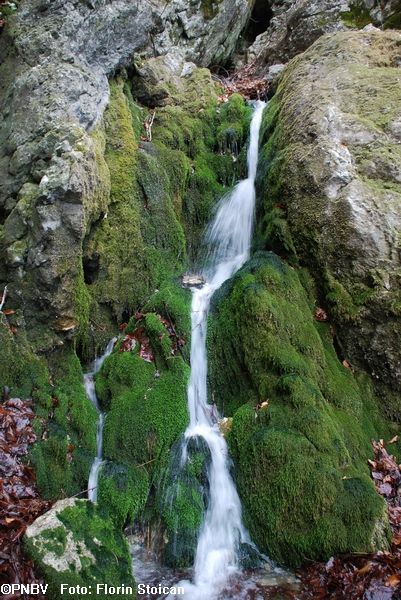
The underground waters were very active, generating numerous endokarst phenomena, represented by over 100 caves, to which are added numerous exokarst phenomena. Numerous sources of water of the springs are present, of which that of the beautiful spring next to the Pahomie hermitage is the most important. Other smaller ones can be found north of Curmătura Builei (La Troiţă), Poiana Scărişoara, Poiana Pătrunsa, Bistriţa.