
N.P. Buila-Vânturarița

Buila-Vânturariţa National Park, a site of the European Natura 2000 Ecological Network (SCI and SPA), was established by GD 2151/2004, as a result of the studies and endeavors of the Kogayon Association and is administered by the RNP Romsilva in partnership with the Kogayon Association.

It is located in Vâlcea county, in the south of the Căpăţănii Mountains, on the territory of the Costeşti, Bărbăteşti and Băile Olăneşti localities.
It is the smallest national park in Romania, with an area of almost 4500 ha.

The park includes the linear calcareous ridge of the Buila-Vânturariţa massif, with a length of about 14 km, dominated by the two peaks that give the name of the massif: the Buila peak (1849 m) and the Vânturariţa Mare peak (1885 m).

The calcareous massif has numerous exokarst forms (gorges, sinkholes, lapis) and endokarst (caves and avenues), paleontological sites, but also virgin forests and numerous protected species of flora and fauna.

An additional element of attraction of the park is the cultural-historical objectives: monasteries, hermitages, churches, including caves, as well as traditions, customs and traditional architecture in the villages at the foot of the mountain.

P.N. Buila-Vânturarița

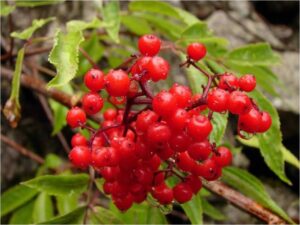
Fauna​

Fauna The first researches were carried out in 1956 by Alexandru Buia, M. Păun, followed by several botanists who published partial lists of plants from this massif.The floristic spectrum The floristic and faunal diversity of the ecosystems within the Buila-Vânturariţa National Park is very large, due to a complex of
Read More
P.N. Buila-Vânturarița

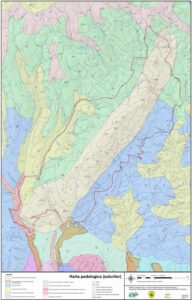
Pedology

Pedology The soils in the Buila-Vânturariţa massif, being mostly formed on a calcareous substrate, do not present a great diversification, being different only because of the type of plant associations that were formed on them.Overall, between the soils of the predominant Buila-Vânturariţa National Park are the redzines due to the

Read More
P.N. Buila-Vânturarița

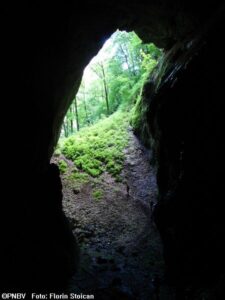
Speology

Speology The calcareous ridge of the Buila-Vânturariţa massif, through its SW-NE direction, constituted and constitutes a barrier for the rivers that gather the waters on the southern slopes of the Căpățănii Mountains. The rivers, forced to bypass the central area, managed to break through this barrier only at the two

Read More