Fauna
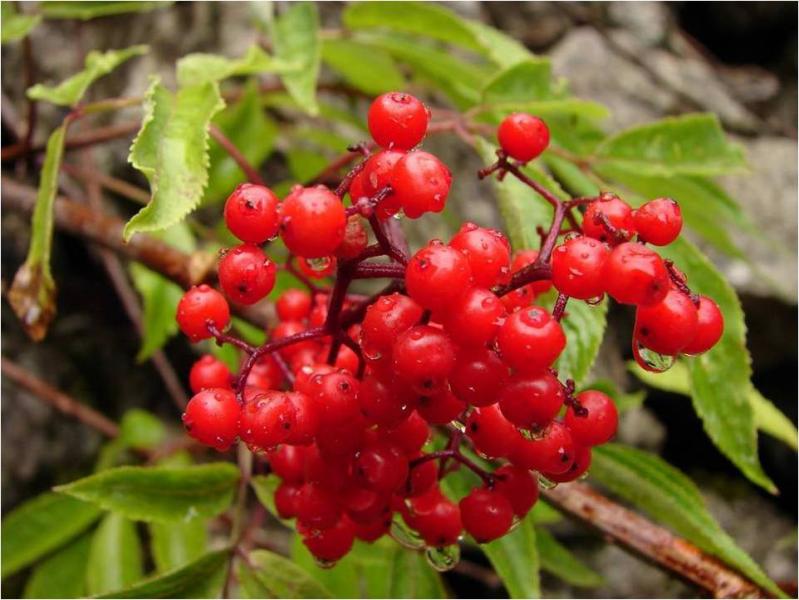
Fauna The first researches were carried out in 1956 by Alexandru Buia, M. Păun, followed by several botanists who published partial lists of plants from this massif.The floristic spectrum The floristic and faunal diversity of the ecosystems within the Buila-Vânturariţa National Park is very large, due to a complex of factors, including: the mountainous relief […]
Climate
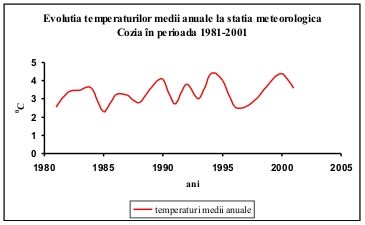
Climate The climate is vertically layered, following the relief steps, with differences and even climate inversions from one slope to another. The beech floor is characterized by precipitation between 600 and 900 mm/year, even reaching 1000 mm/year, a humidity between 68 and 70%, average annual temperatures between 6 and 90C. The spruce floor is characterized […]
Hydrology
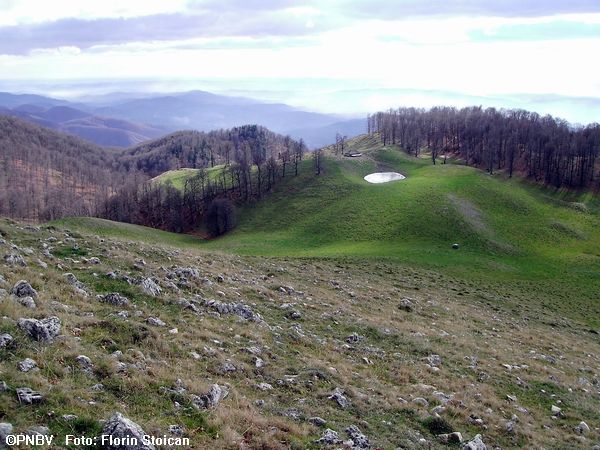
Hydrology The entire hydrographic network of the Buila-Vânturariţa massif is tributary to the Olt River, through its direct or indirect right-wing tributaries, with a course direction, in large lines from north to south. The main rivers flowing in the massif are, from southwest to northeast: Bistriţa, a tributary of the Olt, which springs from the […]
Geomorfology
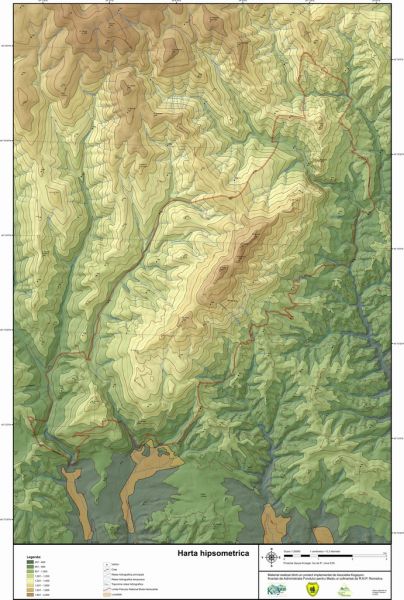
Geomorphology Unlike the Capățănii Mountains of which it is a part, the Buila-Vânturariţa Massif has special characteristics, specific to linear and island calcareous ridges. The main peak has a length of about 14 km, but having a unitary character only between the Costeşti gorges and the Cheile Cheia, with a small interruption in the Curmătura […]
Geology
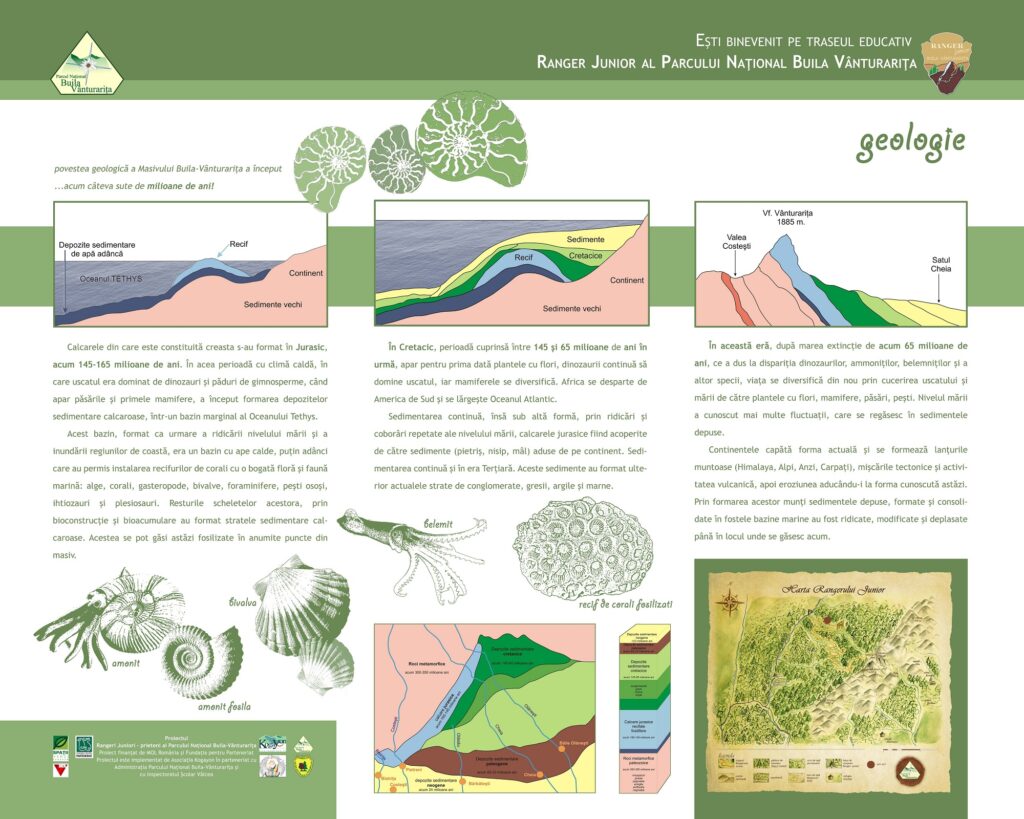
Geology Tectonic framework From a tectonic point of view, the area is part of the Carpathian Orogen. The Buila-Vânturariţa massif is part of the Getic canvas, a unit of the median Dacids in the Southern Carpathians, put in place in the Senonian, within the Laramic tectogenesis. The Getic cloth is made up of prealpine crystallophilic […]
Map
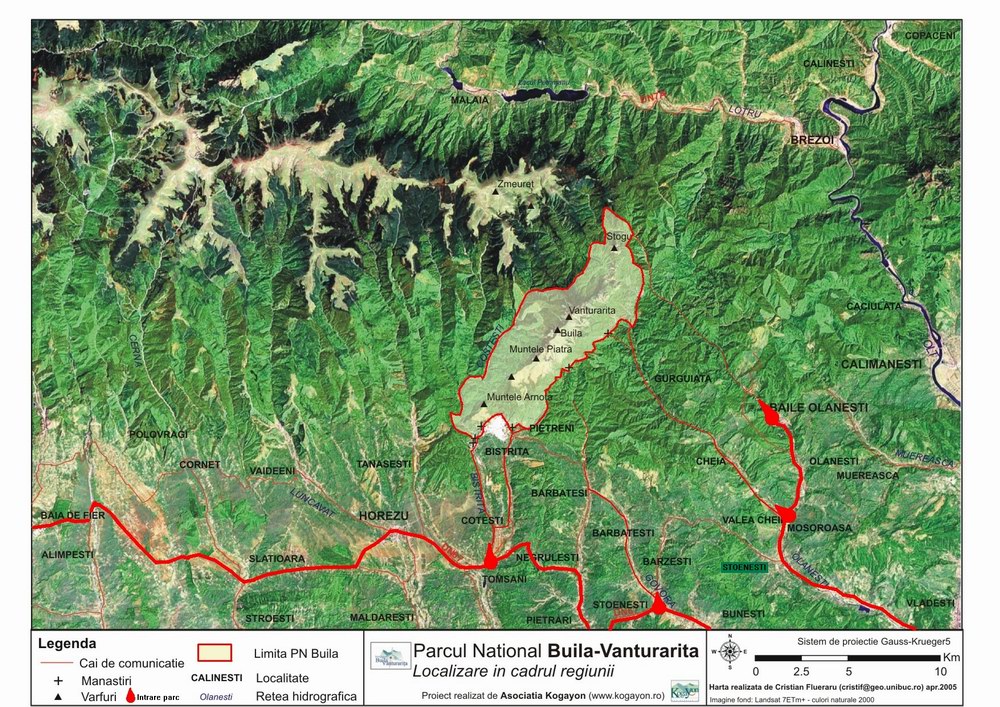
the map The Buila-Vânturariţa massif is located in the central-northern part of Vâlcea county and is part of the Căpățănii Mountains. The massif stands out from their main chain, both by layout and by constitution and relief. The main ridge of the Căpățănii Mountains, consisting mainly of crystalline schists, has an east-west layout, with secondary […]
Access points
Access points Buila-Vânturariţa National Park has 6 entry points: 3 in the Costeşti commune, one in the Bistriţa valley and two in the Costesti Valley: Bistriţa, Pietreni-Prislop and Pietreni-Valea Morii; 1 in Bărbăteşti commune on the Otăsăului valley; 1 in the village of Cheia on the Cheia valley; 1 in the town of Băile Olăneşti […]
Location
Location The Buila-Vânturariţa massif is located in the central-northern part of Vâlcea county and is part of the Căpățănii Mountains. The massif stands out from their main chain, both by layout and by constitution and relief. The main ridge of the Căpățănii Mountains, consisting mainly of crystalline schists, has an east-west layout, with secondary ridges […]
Hanul Vatra Guesthouse
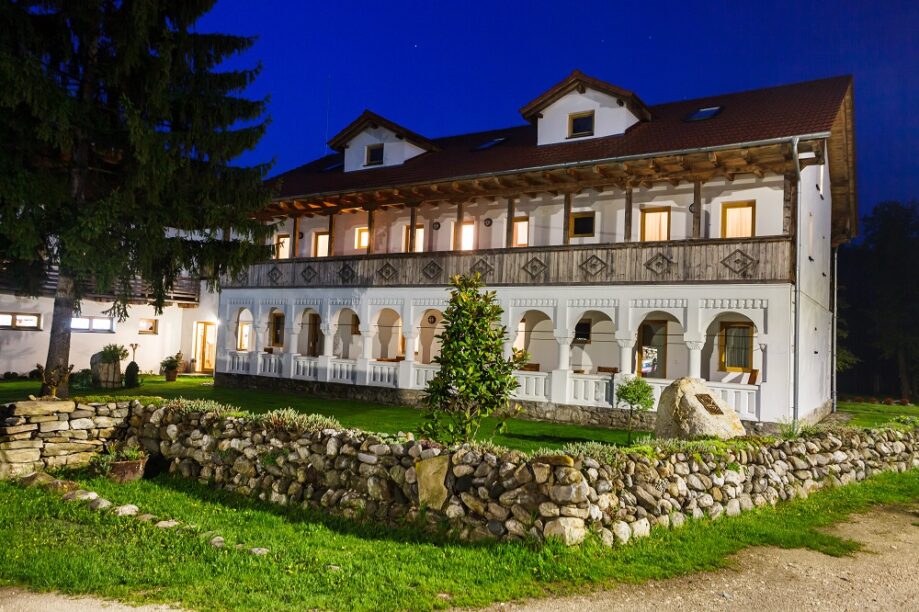
Hanul Vatra Guesthouse Contact City: La Băi 184, 247115 Costești, Jud. Vâlcea, DJ646A Phone: 0754367273 hanulvatra@gmail.com, contact@hanulvatra.com Website: www.hanulvatra.ro Accommodation: 43, 16 rooms Brief description Located in the center of the Costești commune, just 6 km from Horezu, the Vatra Inn emerges from a gorge cooled by the rapid waters that descend from the Buila-Vânturarița […]
Moara Viselor Guesthouse
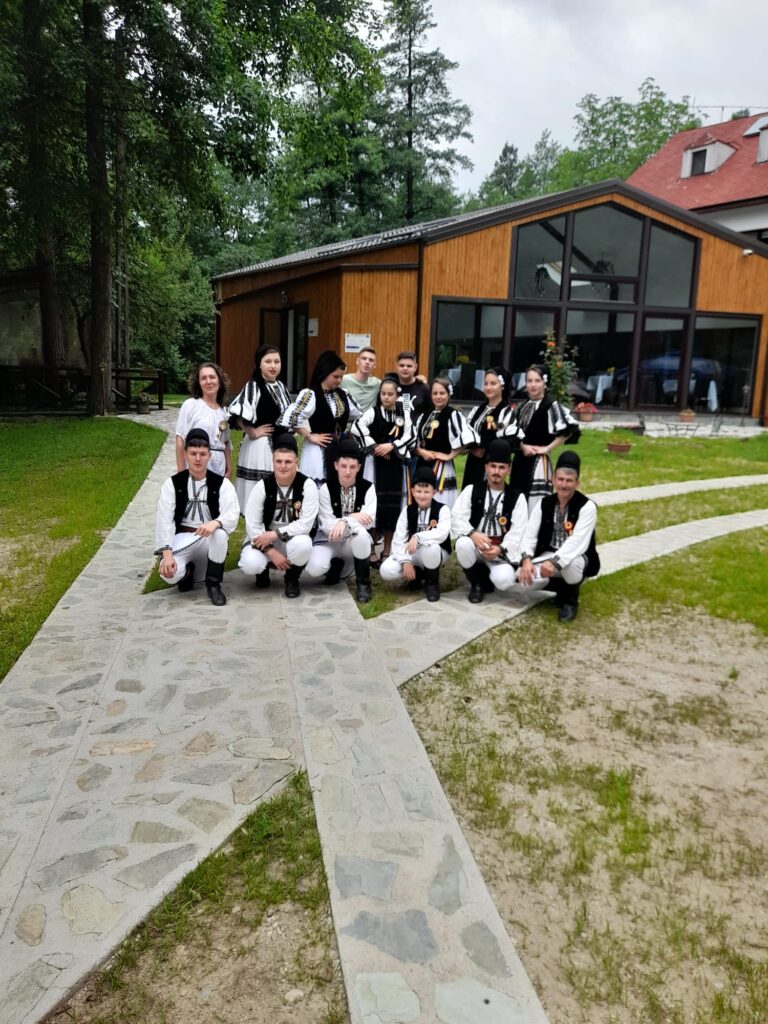
Moara Viselor Guesthouse Contact City: Vaideeni Phone: 0746067635 Receptie@moaraviselor.ro Website: Accommodation: 18, 7 rooms Brief description The complex has 7 accommodation rooms with its own bathrooms, a restaurant with a capacity of more than 100 people, a 3-lake trout, an adventure park of 4000 square meters, with routes from low to very difficulty. Facilities: Parking, […]